Game Design
How RTP works in slot games, and what it doesn't tell you
RTP is a long-term average, not a forecast for your session. What return to player means, how volatility differs, and why bonus buys can show different RTPs.

Almost every slot lists a return to player figure, usually somewhere in the mid-nineties. It’s one of the most quoted numbers in casino games, and one of the most misread. This post explains what RTP measures, what it can’t tell you, and why a single game can show several slightly different RTPs.
What RTP is
Return to player (RTP) is the share of all the money wagered on a game that the game is designed to pay back as wins, averaged over a very large number of rounds.
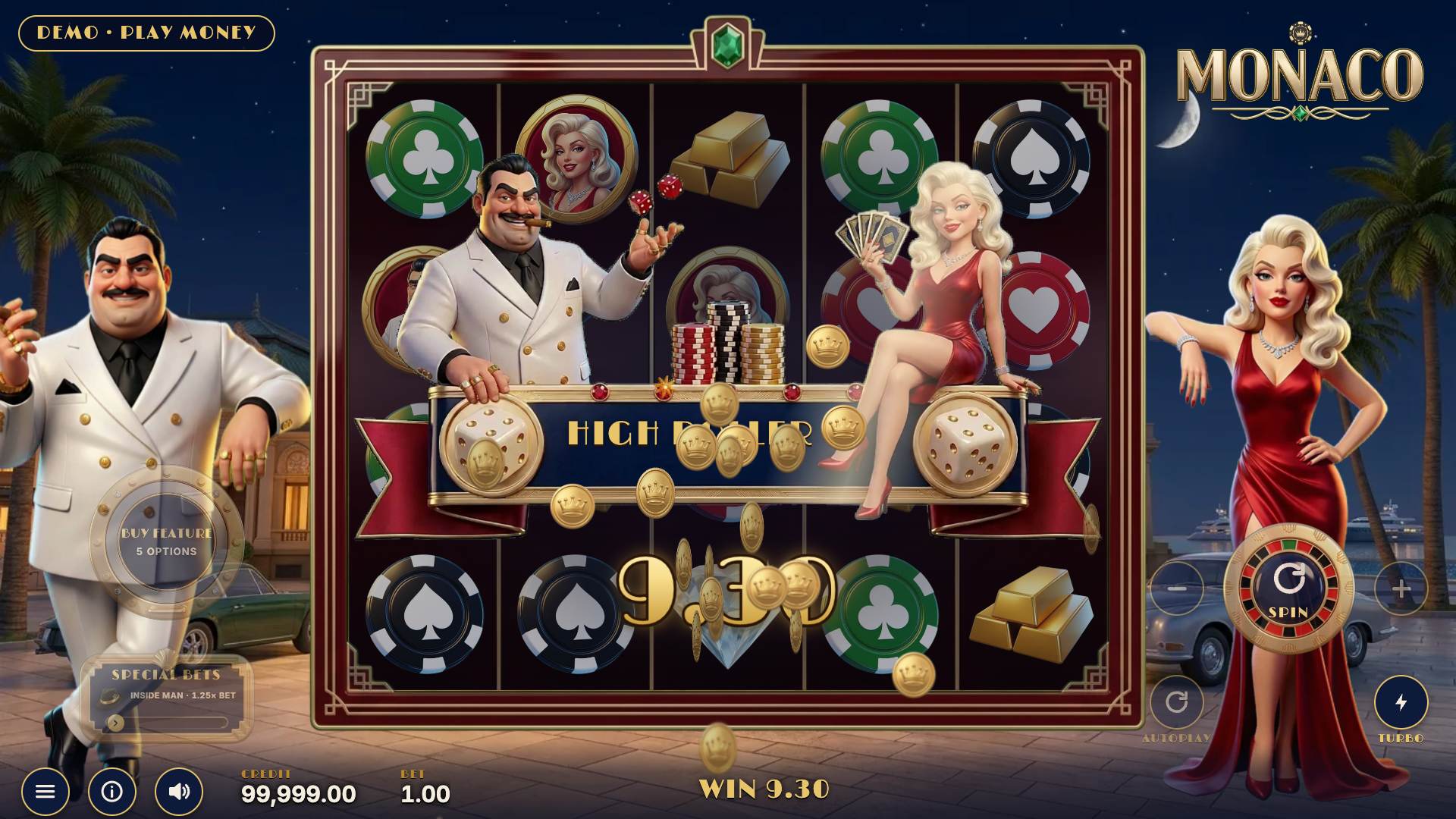
Take the base game of Monaco: The Heist, with a theoretical RTP of 96.66%. Across an enormous number of spins, the game is designed to return 96.66 for every 100 wagered. The rest is the house edge.
Great Britain’s gambling regulator describes the percentage the same way: as an average over a significant number of plays, not something that applies each time a game is played (Gambling Commission).
What RTP doesn’t tell you
It doesn’t predict a session. RTP is a property of the game over the long run, not of your next hundred spins. A short session can end well above or well below it. The Gambling Commission makes the same point: RTP can’t be measured on one person’s play alone (Gambling Commission, RTP games).
It doesn’t describe volatility. Volatility is about how the return is paid out: lots of small wins, or long gaps broken up by rare large ones. Two games with exactly the same RTP can feel completely different to play. RTP alone won’t tell you which kind of game you’re looking at.
It doesn’t tell you how often the top prize lands. Monaco’s maximum win is 25,000× the bet. That’s a theoretical maximum, and reaching it is extremely rare. The RTP covers it, along with every other outcome, but it says nothing about how likely any single result is.
Why bonus buys can have slightly different RTPs
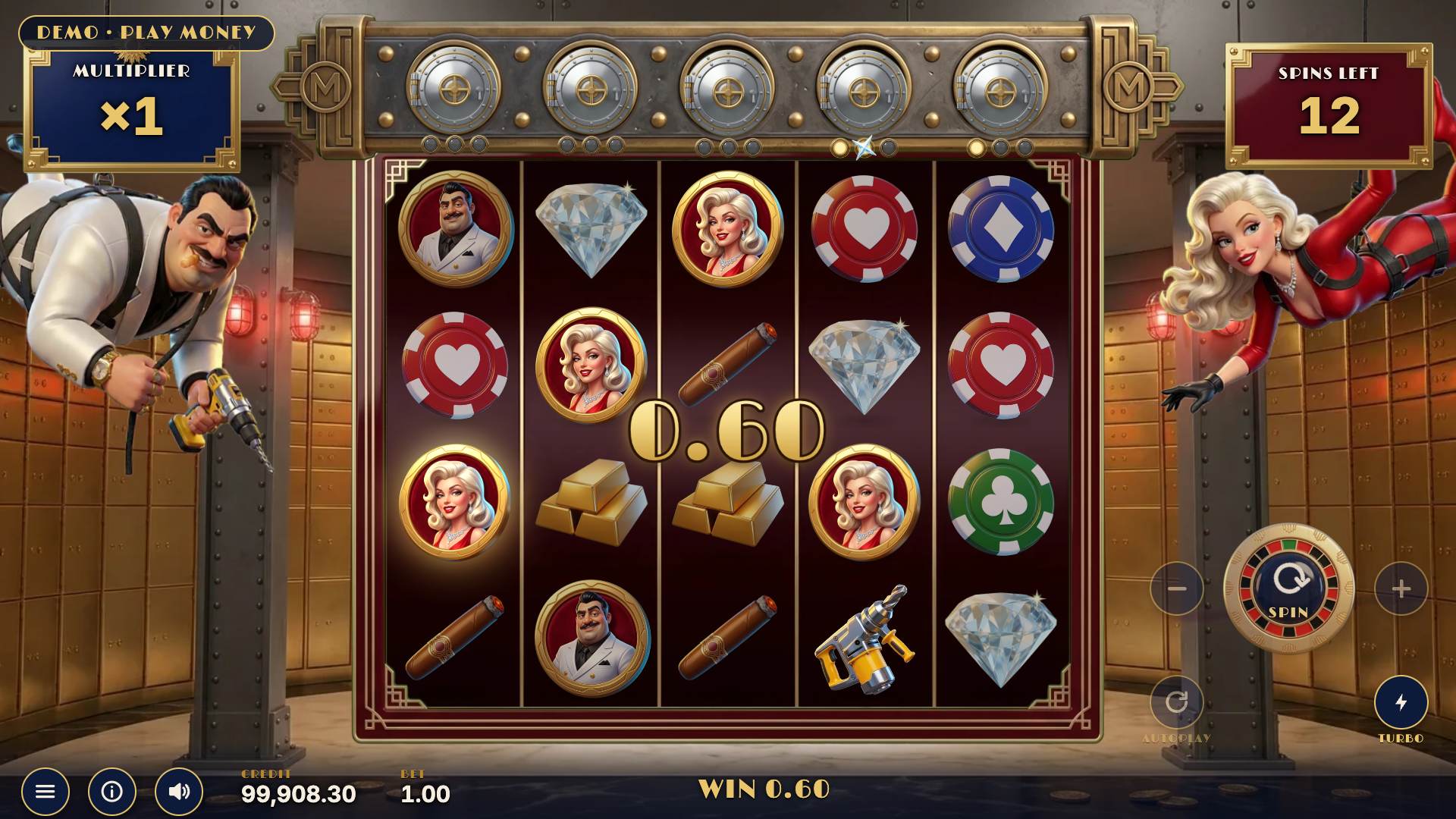
A game like Monaco has more than one way to play. There’s the base game, the Inside Man special bet, and five bonus buys. Mathematically, each of those is its own mode: it has its own price and its own spread of possible outcomes.
The price of a bonus buy is set so that the mode’s RTP lands close to the game’s target. But every mode’s outcomes are different, so the modes rarely land on exactly the same figure. That’s why a game’s rules often quote an RTP range instead of a single number. Here is Monaco’s, straight from the game’s math build:
| Mode | Cost (× bet) | RTP |
|---|---|---|
| Base game | 1× | 96.66% |
| Inside Man (special bet) | 1.25× | 96.66% |
| Buy: Smash & Grab | 29.75× | 96.60% |
| Buy: Vault Heist | 100× | 96.66% |
| Buy: The Long Con | 223.5× | 96.66% |
| Buy: Heist+ | 241.5× | 96.64% |
| Buy: The Big Score | 418× | 96.64% |
Across all seven modes, Monaco’s theoretical RTP sits between 96.60% and 96.66%. A higher price doesn’t mean a better return. It buys a bigger, faster start to the bonus, at much the same long-run rate.
Where the number comes from
RTP is a design figure. It’s calculated from the game’s math model, the full set of outcomes and their probabilities, rather than observed after release. The Gambling Commission calls it the game’s designed outcome, and expects businesses to keep measuring a live game’s performance against it (Gambling Commission, RTP games).
Play with limits
RTP describes a game, not your budget. Decide what you’re comfortable spending before you play, and stop when you reach it. Our responsible gaming page lists free, confidential help if gambling stops being fun.
Everything on rizzgaming.io uses play money, so the Monaco: The Heist demo is a safe way to see how a game behaves without anything at stake.
Sources
- Gambling Commission, Return to player: how much gaming machines payout (last updated 16 June 2021).
- Gambling Commission, RTP games (freedom of information response).